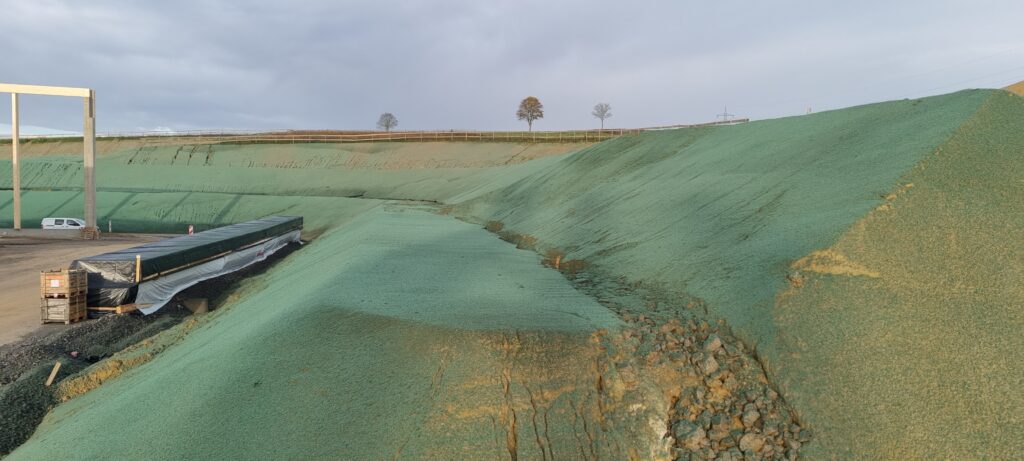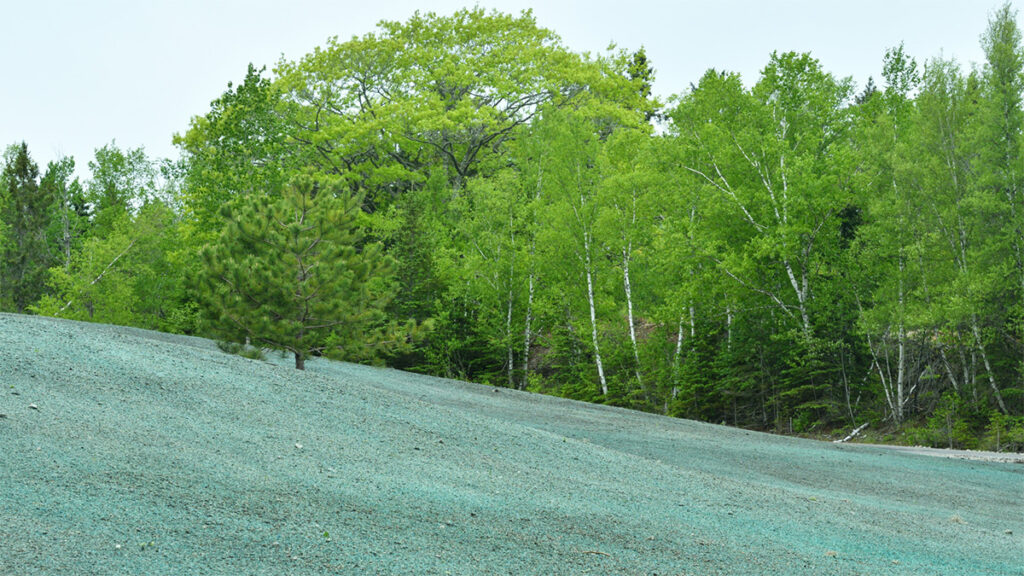


- What is Hydroter and How It Works
- When to Choose Hydroter Instead of Topsoil
- The Main Benefits of Hydroter
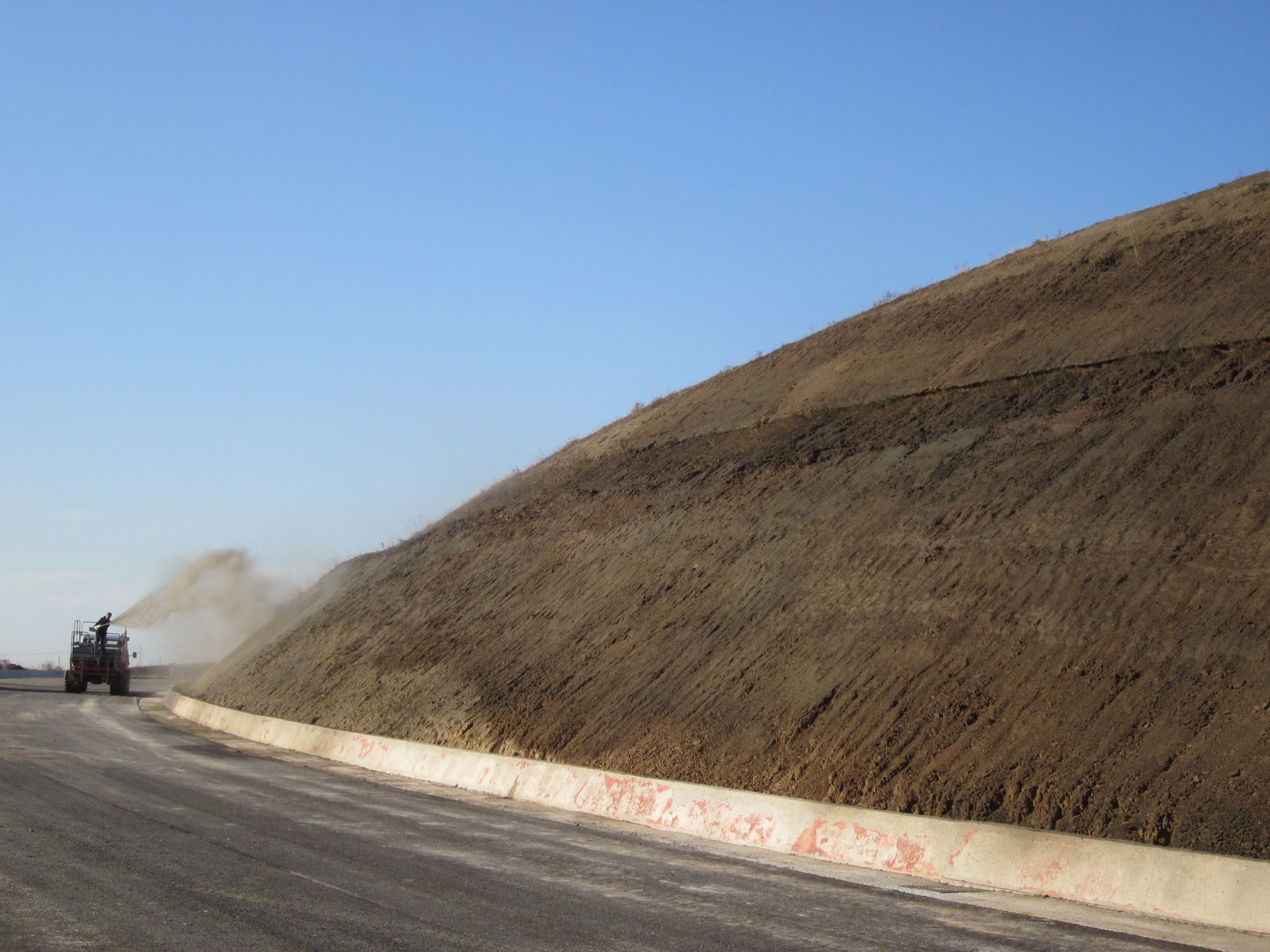
- How Hydroter Is Applied: Essential Procedure
- Hydroter vs Topsoil: Differences in Costs and Logistics
- For More Demanding Sites- Biover System (Hydroter + Hydromat MFL)
- Full Service Green Solutions: Expertise and Experience for Tailored Solutions
Hydroter is a fully plant-based product composed of wood fibres and a balanced blend of humic substances, amino acids, biostimulants and mycorrhizae, all derived from renewable sources. Why it works: on degraded soils, many erosion control and revegetation interventions fail because of the lack of organic matter and biological activity. Hydroter contains key biological elements that help initiate vigorous vegetative activity, promote root development and vegetation establishment, while also triggering the nutrient cycle needed to regenerate depleted and sterile soils.
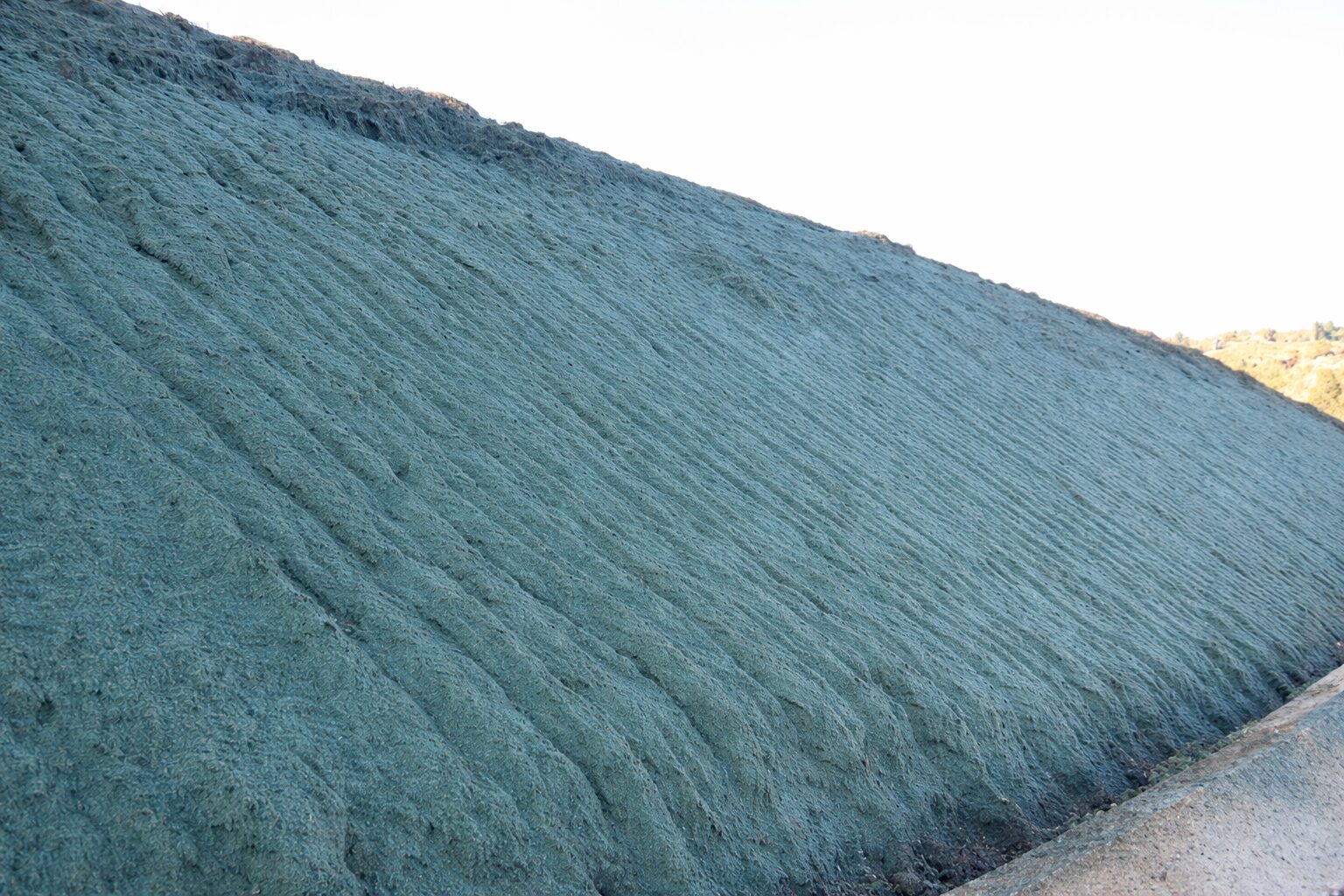
Hydroter is particularly suitable when topsoil placement is inefficient or impractical, for example:
- sites that are difficult to access with conventional equipment;
- compacted surfaces or conditions where topsoil placement is impossible;
- contexts where instability of topsoil layers on slopes and compacted ground must be avoided;
- job sites where reducing handling operations, heavy vehicle traffic and related emissions is a priority.
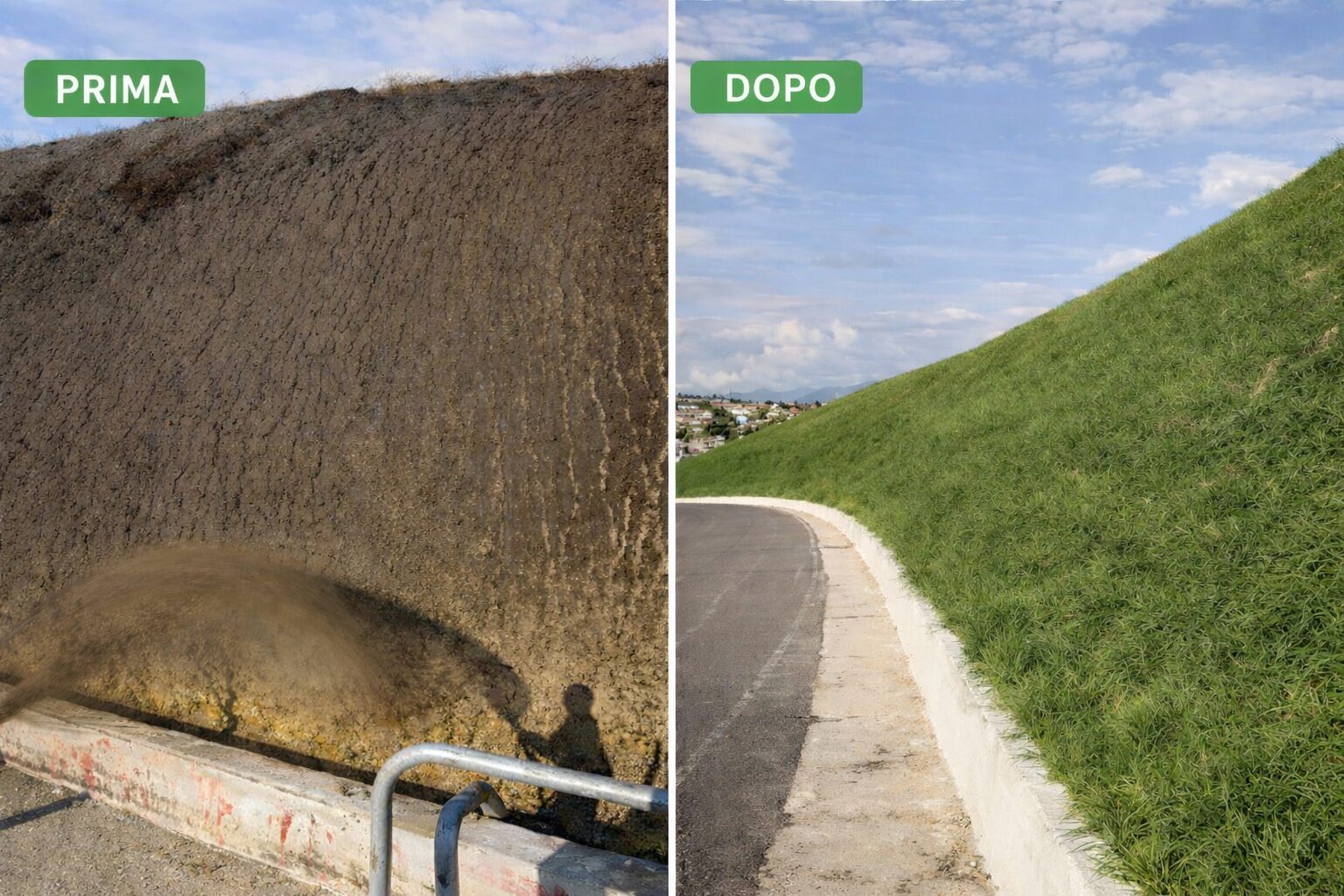
Technical and site-related benefits
- It allows cost savings and shorter execution times.
- It is ideal for sites that are difficult to access with conventional equipment or where topsoil placement is impossible.
- It can be applied in all seasons.
- It can be applied by hydroseeder.
- It eliminates the risk of instability of topsoil layers on compacted ground.
Agronomic benefits (establishment and growth)
- It stimulates soil microbiological activity.
- It promotes vegetation establishment and root development.
Environmental benefits (sustainability and resources)
- It is produced from renewable resources in an environmentally sustainable way.
- It eliminates or reduces the use of agricultural soil, avoiding the removal and relocation of topsoil.
- It is a sustainable solution with no additional land consumption.
Turning poor soil into vegetation-supporting soil? With Hydroter, it can be done sustainably.
Step 1 – Substrate assessment
Before defining the mixture, a soil analysis is recommended to determine agronomic requirements. Depending on the results, it may be appropriate to supplement with fertilisers and pH corrective or neutralising agents.
Step 2 – Choosing the solution according to slope gradient
- On mildly sloping ground, where erosion potential is lower: Hydroter can be applied on its own through hydroseeding with seed and fertilisers.
- On steeper slopes or where erosion potential is higher: in combination with Hydroter, Hydromat MFL (matrix of locked fibres) provides erosion control with greater functional longevity.
Step 3 – Indicative application rates
The application rate depends mainly on the organic matter content and the slope gradient.
- organic matter < 5 and ≥ 1.5; slope ≤ 4H:1V → 400 g/m²
- organic matter < 1.5 and ≥ 0.75; slope > 4H:1V and ≤ 3H:1V → 500 g/m²
- organic matter < 0.75; slope > 3H:1V and ≤ 2H:1V → 600 g/m²
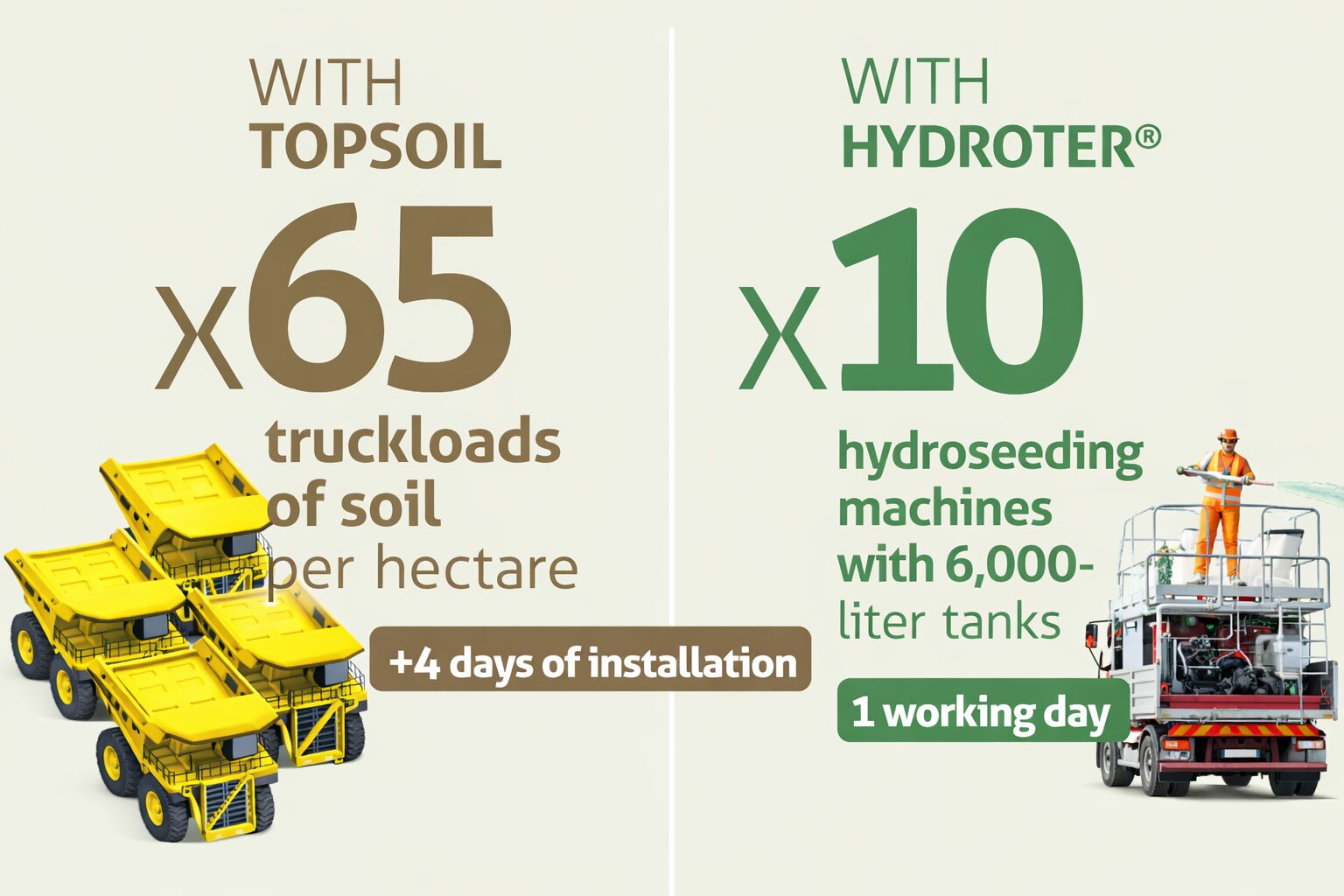
To cover 1 hectare with 10 cm of topsoil, approximately 1,000 m³ of soil are required, equivalent to 65 truckloads, along with around 4 working days using an excavator.
As an alternative, 5,000 kg of Hydroter, equivalent to 500 g/m², provide the same amount of organic components and nutrients for the soil: application requires only 10 hydroseeders with 6,000-litre volumetric pumps and just one working day. (insert image created by Emanuele)
In addition, Hydroter is delivered to site in convenient bags and applied by hydroseeding, avoiding heavy vehicle traffic and reducing emissions, road congestion and local traffic.
Cost savings and environmental benefits through the use of Hydroter.
The effectiveness of Hydroter can be measured on two levels: on the one hand, it simplifies logistics compared to topsoil placement, with fewer transports, shorter times and reduced handling; on the other hand, it creates more favourable conditions for vegetation on poor soils, reducing the risk of failure typically associated with substrates lacking organic matter and biological activity.
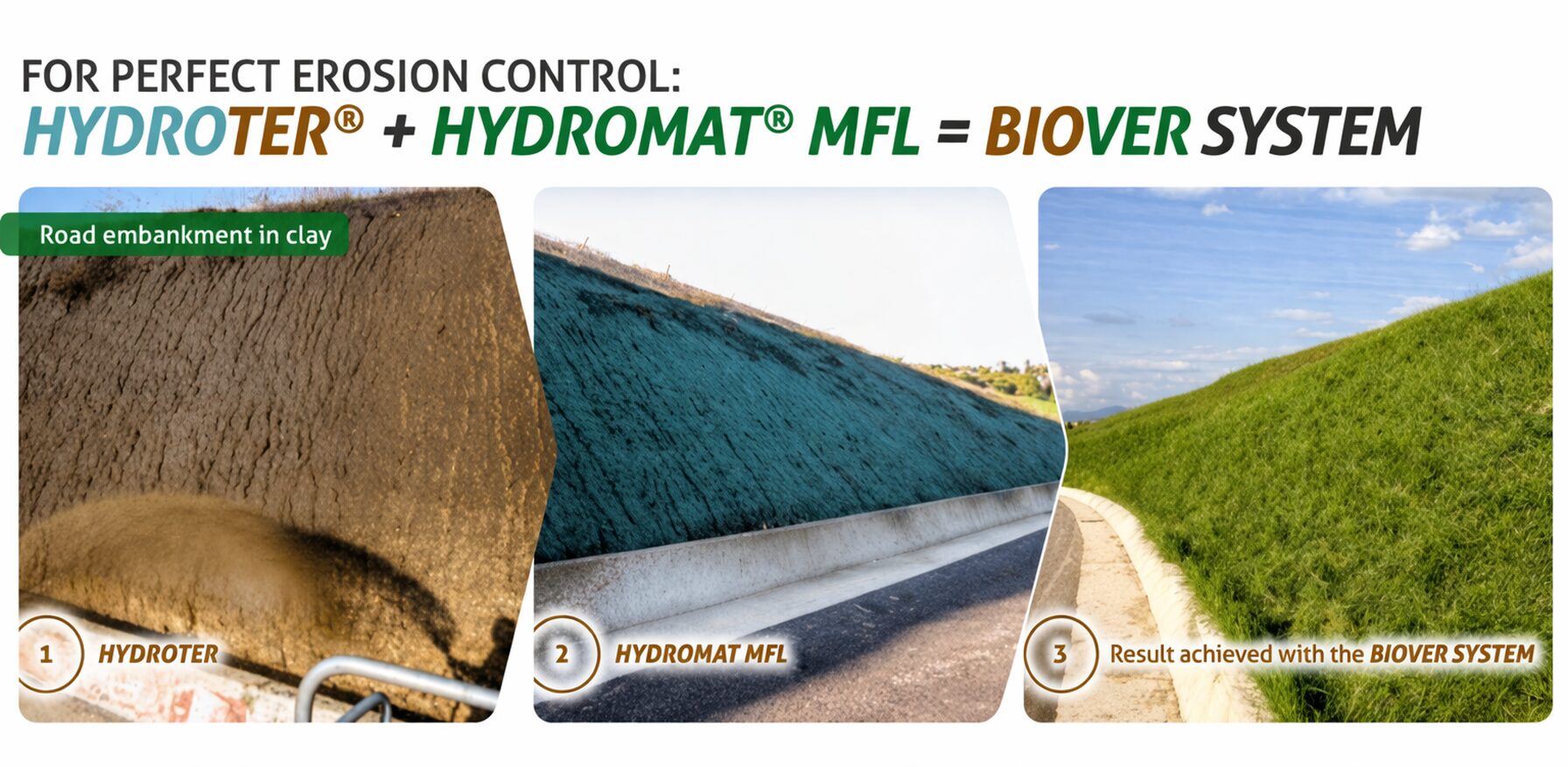
Where potential erosion is high, a system-based approach becomes decisive: Biover System combines Hydroter with Hydromat MFL, achieving effective erosion control and improved performance durability during the critical establishment phase.
In practice: Hydroter works on substrate improvement and biological activation; Hydromat MFL supports erosion protection and surface stability, increasing the likelihood of success on steep slopes and under severe conditions.
Thanks to decades of experience in erosion control, hydroseeding and revegetation, Full Service Green Solutions supports designers, contractors and public bodies in choosing the most suitable solution, defining the correct application strategy, whether Hydroter through hydroseeding or Biover System with Hydromat MFL, as well as any agronomic additions required according to site conditions.
To assess Hydroter for your project and define a mixture consistent with slope gradient, substrate and revegetation objectives, dedicated technical support is available on request.
The Full Service approach prioritises low-impact environmental solutions, quick application and long-lasting protection. With Hydromat MFL, it is possible to intervene selectively, optimising time and resources while ensuring the highest return in terms of performance, safety and sustainability.