

Hydroseeding with Hydromat
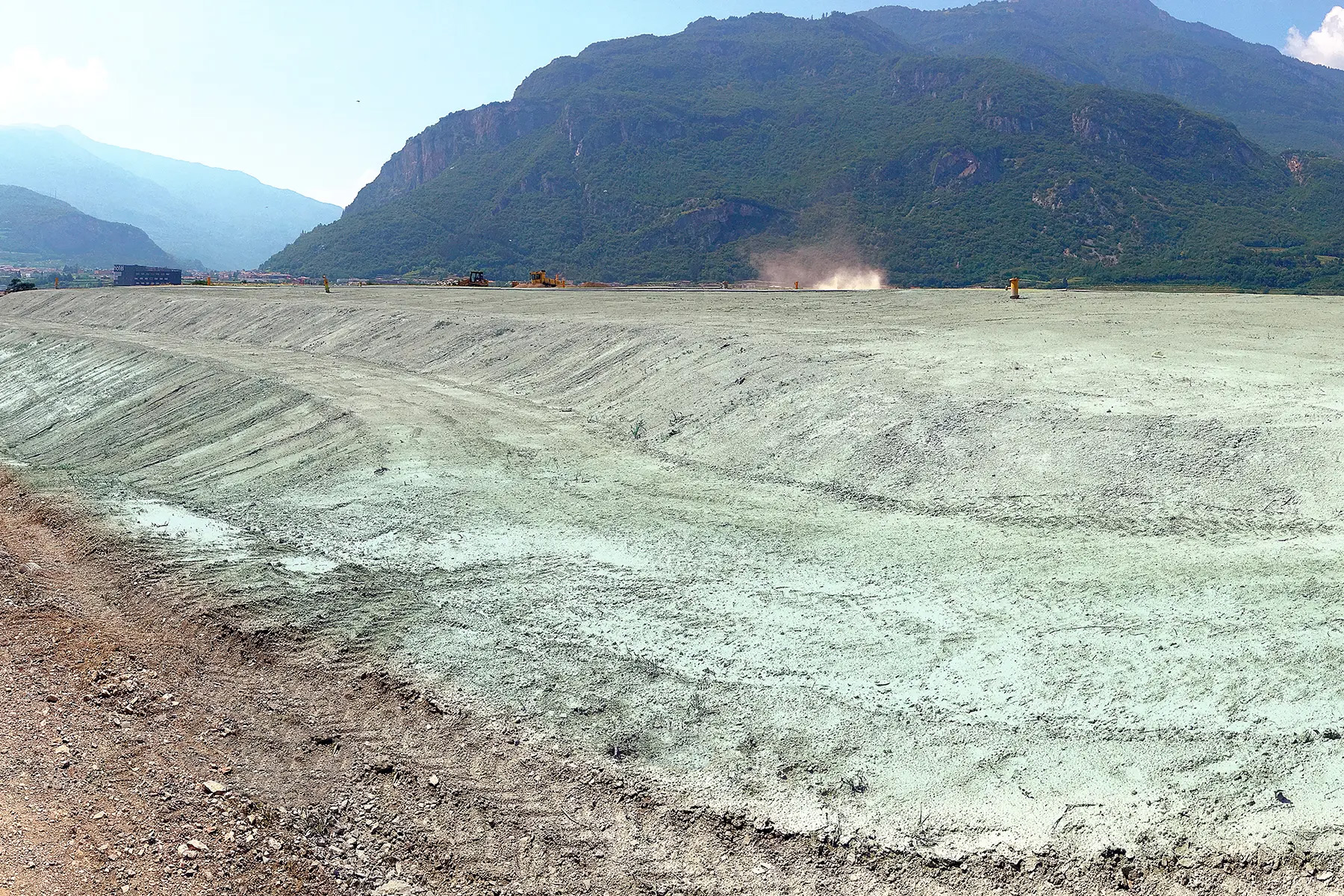
This hydroseeding project with HYDROMAT® MFL secured approximately 14,000 m² of steep highway embankments in a mountain environment. The surfaces were subject to active erosion, and the poor substrate was unsuitable for revegetation with conventional techniques. Applied in a single pass, the bonded fiber matrix provided immediate erosion protection and the establishment of a stable grass cover.
Task
The general contractor contacted us to stabilize approximately 14,000 m² of high-altitude highway embankments affected by active erosion after the earthworks.
Background: steep embankments on sterile substrate
The site was a new highway bypass section at an elevation of 950 to 1,200 m above sea level. Cuttings and connecting fills had left extensive embankments with no vegetation cover. Slope angles frequently exceeded 35°, with local peaks close to 40°.
The substrate consisted largely of coarse excavated material, poor in fines and organic matter. Weathered rock was exposed along some sections of the cuttings. Under these conditions the soil does not retain water, and seed applied by conventional hydroseeding is washed away before it can germinate.
The challenge: surface erosion and a short working window
The first autumn rains after the earthworks had already cut rills up to 15–20 cm deep. Fine material carried downslope was settling in the roadside drainage channels. Embankment erosion created two problems:
- Surface instability: progressive erosion was driving up maintenance costs and increasing the risk of clogging the highway drainage system.
- Tight timing: at this elevation the growing season is short, so the treatment had to ensure germination and protection before winter.
Installing erosion control blankets would have required seedbed preparation, staking and rope access work across large, hard-to-reach areas. The time and cost involved were incompatible with the construction schedule.
The solution: erosion control hydroseeding with HYDROMAT® MFL
Full Service proposed hydroseeding with HYDROMAT® MFL, a biodegradable bonded fiber matrix applied by spraying. The product combines the protective function of an erosion control blanket with the speed of professional hydroseeding. This makes it an effective alternative to conventional blankets, even on the steepest slopes.
A site inspection and substrate analysis preceded the work. On that basis, three components of the mix were defined:
- Seed mix of herbaceous species suited to the elevation and the soil and climate conditions of the site. Grasses such as Festuca rubra, Dactylis glomerata and Poa pratensis provide cover. Legumes such as Lotus corniculatus and Trifolium repens fix nitrogen in a poor substrate.
- Starter fertilizers and soil correctives to offset the nutrient deficiency of the excavated material.
- HYDROMAT® MFL applied in a single pass together with seed and fertilizer, with no prior soil preparation.
Hydroseeding application
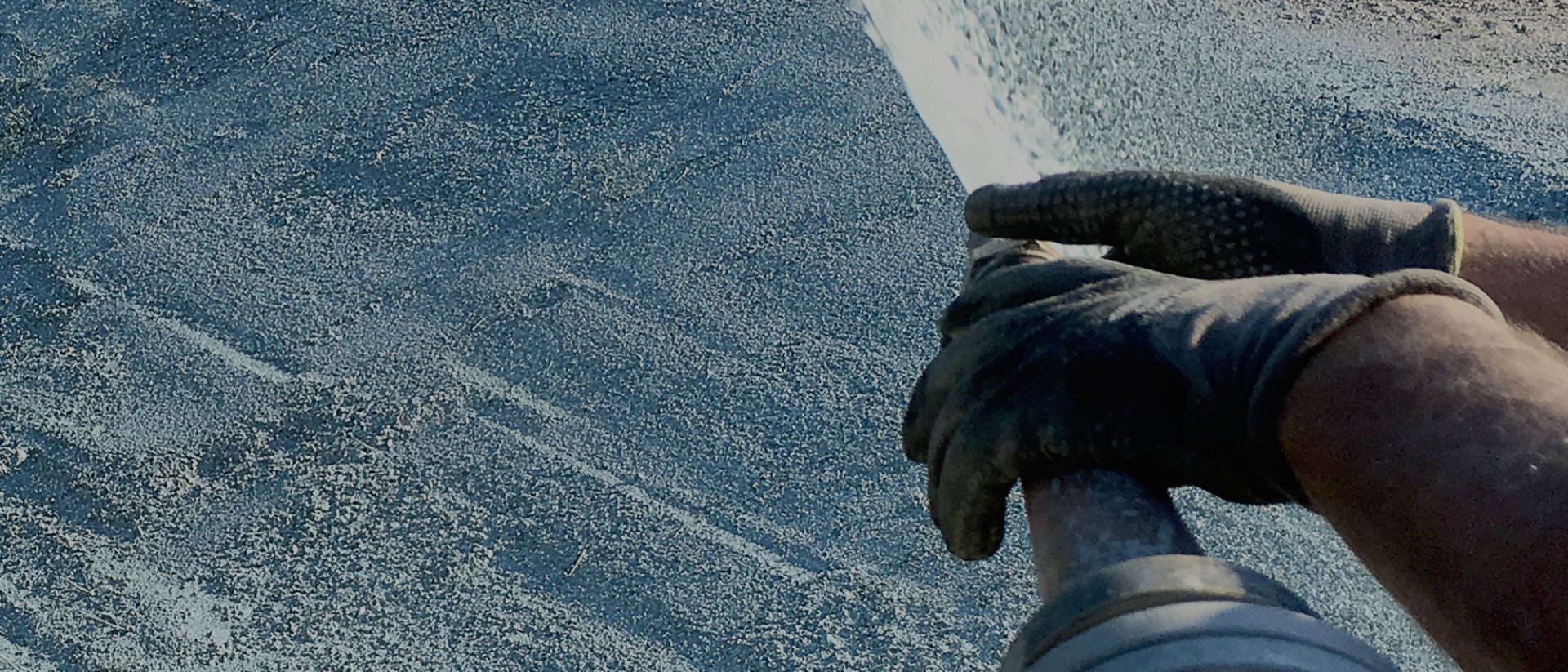
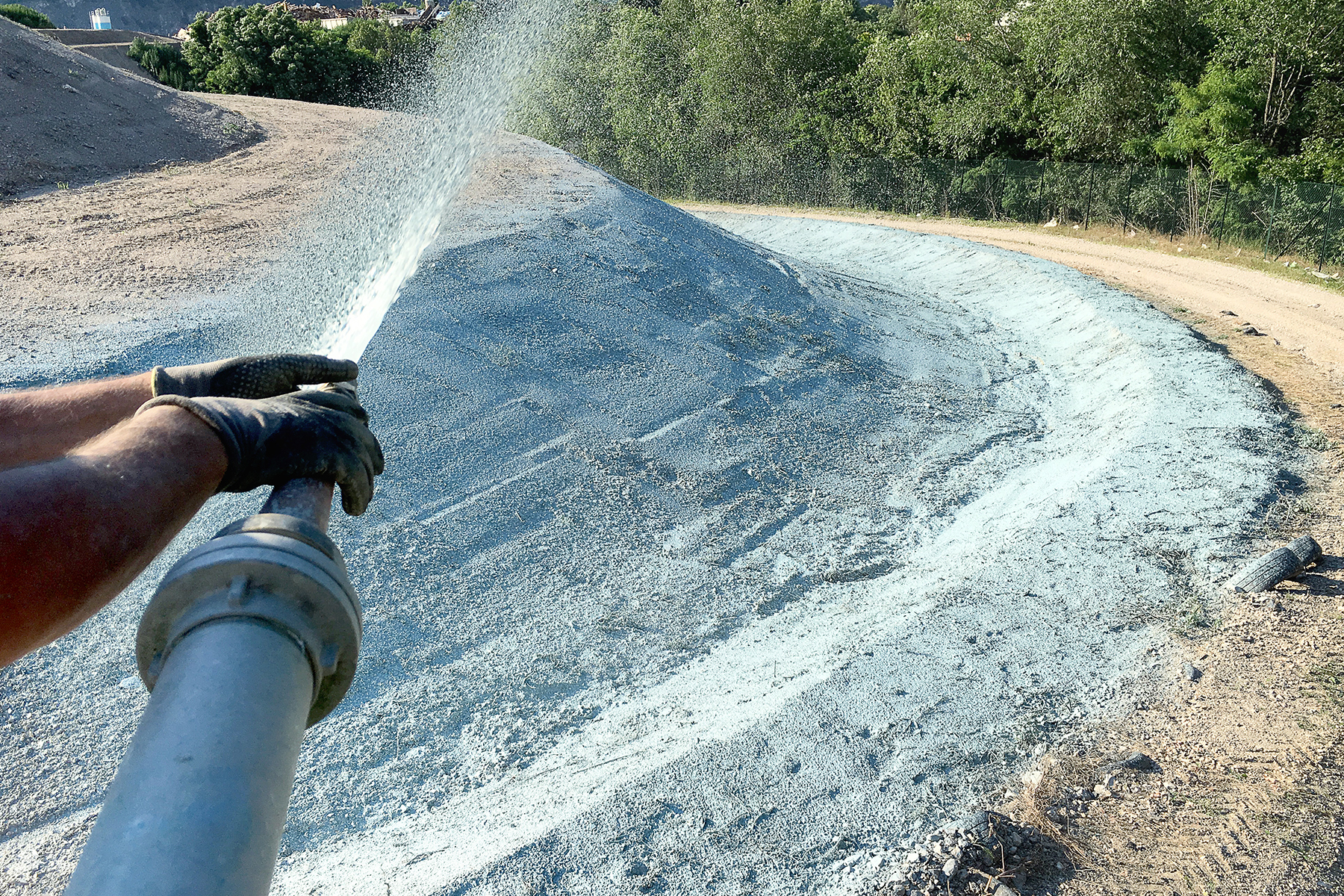
The mix was applied with a hydroseeder operating from the road platform, with hose extensions used to reach the more distant sections. As it dried, the mix formed a continuous, flexible cover that conforms to the irregular profile and to the rocky areas. On these surfaces, a blanket would not have achieved uniform contact with the ground.
From the first hours, the bonded fibers protected the seed from direct raindrop impact and washout. The voids in the matrix retain moisture and allow oxygen exchange, two conditions that are decisive for germination on sterile substrates.
Results: stable revegetation and erosion control
- Application time significantly shorter than installing blankets over the same area.
- Uniform germination within the first few weeks, with even grass cover by the end of the growing season, including on the steepest sections.
- No new erosion rills after the heavy rainfall events that followed application, and no further sediment transport into the drainage channels.
- Nothing to remove: the matrix degrades slowly and adds organic matter to the soil, supporting the development of the grass cover.
Frequently asked questions about hydroseeding with Hydromat
What is HYDROMAT® MFL?
It is a biodegradable bonded fiber matrix applied by hydroseeding. As it dries, it forms a flexible cover that protects the soil from erosion and creates favorable conditions for seed germination.
On what slopes can hydroseeding with Hydromat be used?
HYDROMAT® MFL is also suitable for very steep embankments and for irregular or partly rocky surfaces where blanket installation is difficult. Feasibility should always be assessed case by case based on site conditions.
How does it differ from an erosion control blanket?
HYDROMAT® MFL performs the same protective function, but it is sprayed in a single pass together with seed and fertilizer. It requires no soil preparation or anchoring, reducing time and labor costs.
Can Hydromat be combined with other erosion control systems?
Yes. In the most critical cases, hydroseeding with Hydromat can be combined with bionets or other erosion control systems, depending on slope stability.
When are the first results visible?
Erosion protection is immediate once the matrix has dried. Germination and cover development times depend on climate, elevation, sowing season and the seed mix used.
Assessing a solution for your slopes
On steep embankments, sterile substrates and sites with short working windows, the choice of erosion control system has a direct impact on infrastructure maintenance costs. The Full Service technical team can assess your project with a site inspection and an analysis of soil, morphological and climatic conditions, and design a hydroseeding solution sized to your project. Request a technical consultation.
Full Service can satisfy every request by advising on the most suitable type of product in each situation, evaluating the pedological, lithological, morphological and climatic conditions influencing the choice of the most suitable system and components.