


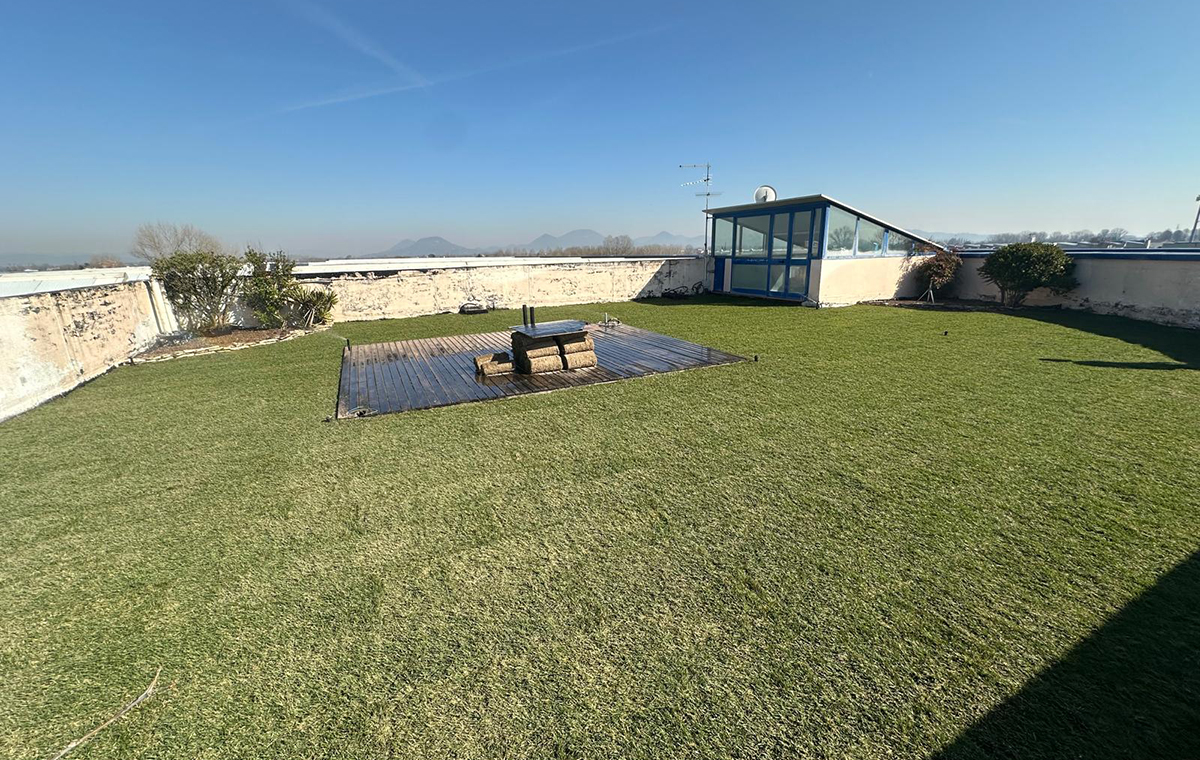
Full Service has taken a practical step toward environmental sustainability by installing a green roof on its industrial building. Complementing the existing 30 kW photovoltaic system, this solution represents a further commitment to reducing the company’s environmental impact. It provides a tangible example of how green roof technology can deliver benefits in terms of energy savings, thermal insulation and improved air quality.
An increasing number of businesses and homeowners are investing in green roofs, recognizing their benefits for buildings and urban environments. But what is a green roof, and why is it such an effective solution?
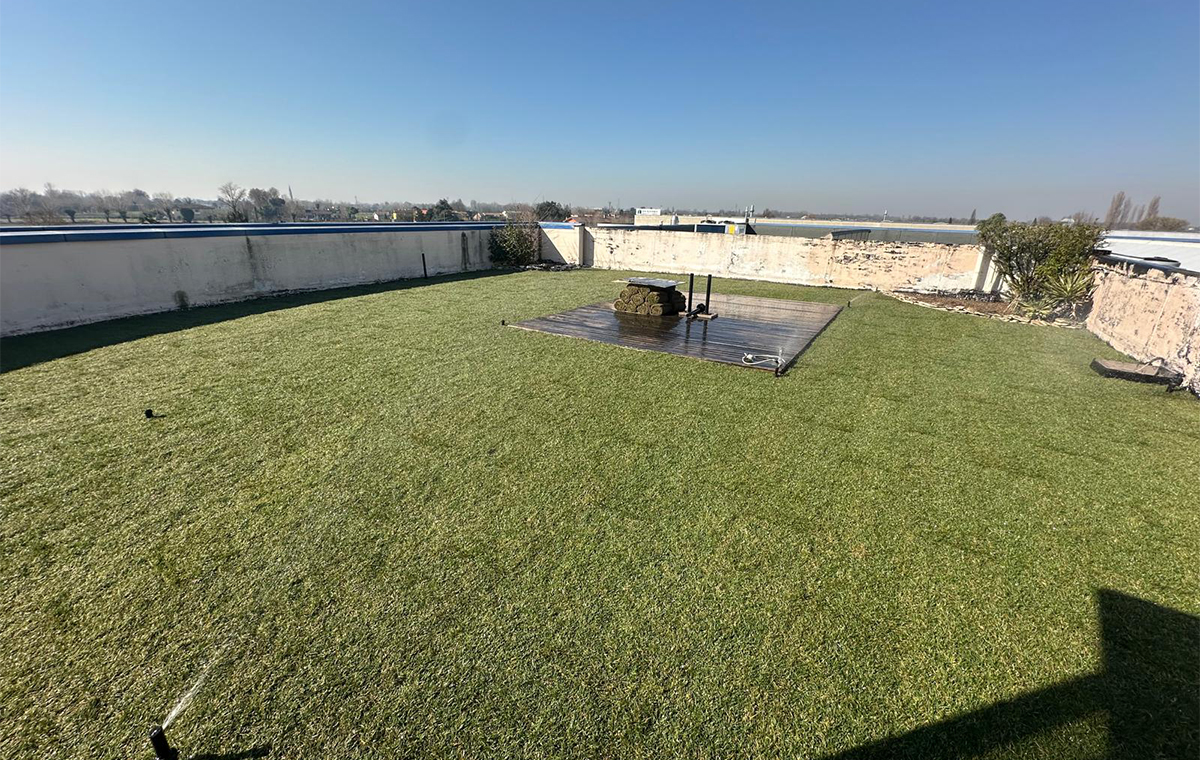
A green roof is a vegetated roofing system installed on a building or structure. It comprises a vegetation layer, a growing substrate and a drainage system. There are several types of green roof:
- Extensive: lightweight, low-maintenance systems with a shallow growing substrate, suitable for hardy, low-growing plants.
- Intensive: systems with a deeper growing substrate that can support larger plants, including shrubs and trees.
- Semi-intensive: an intermediate solution offering a wider variety of plants and moderate maintenance requirements.
Installing a green roof can provide numerous benefits, particularly in urban areas where demand for green space continues to grow.
- Thermal insulation and energy efficiency
A green roof helps reduce heat loss in winter and keeps the building cooler in summer, lowering energy consumption for heating and cooling. This can reduce operating costs and environmental impact. - Rainwater management
Vegetated roofs retain rainwater, reducing runoff and easing pressure on urban drainage systems. This helps limit the risk of flooding and supports more effective water management. - Reduced pollution and improved air quality
Green roof plants capture fine airborne particles and absorb carbon dioxide, helping improve air quality in urban areas. - Longer roof service life
A green roof protects the underlying roofing layers from UV radiation, temperature fluctuations and weather exposure, extending their service life and reducing maintenance requirements. - Mitigation of the urban heat island effect
Green roofs help reduce temperatures in urban areas, mitigating the heat island effect caused by heat accumulating in buildings and paved surfaces. - Increased biodiversity
Green roofs provide habitats for pollinating insects, birds and other small animals, supporting ecological balance. - Enhanced property value
The benefits of a green roof in terms of energy efficiency, appearance and indoor comfort can enhance a property’s market value.
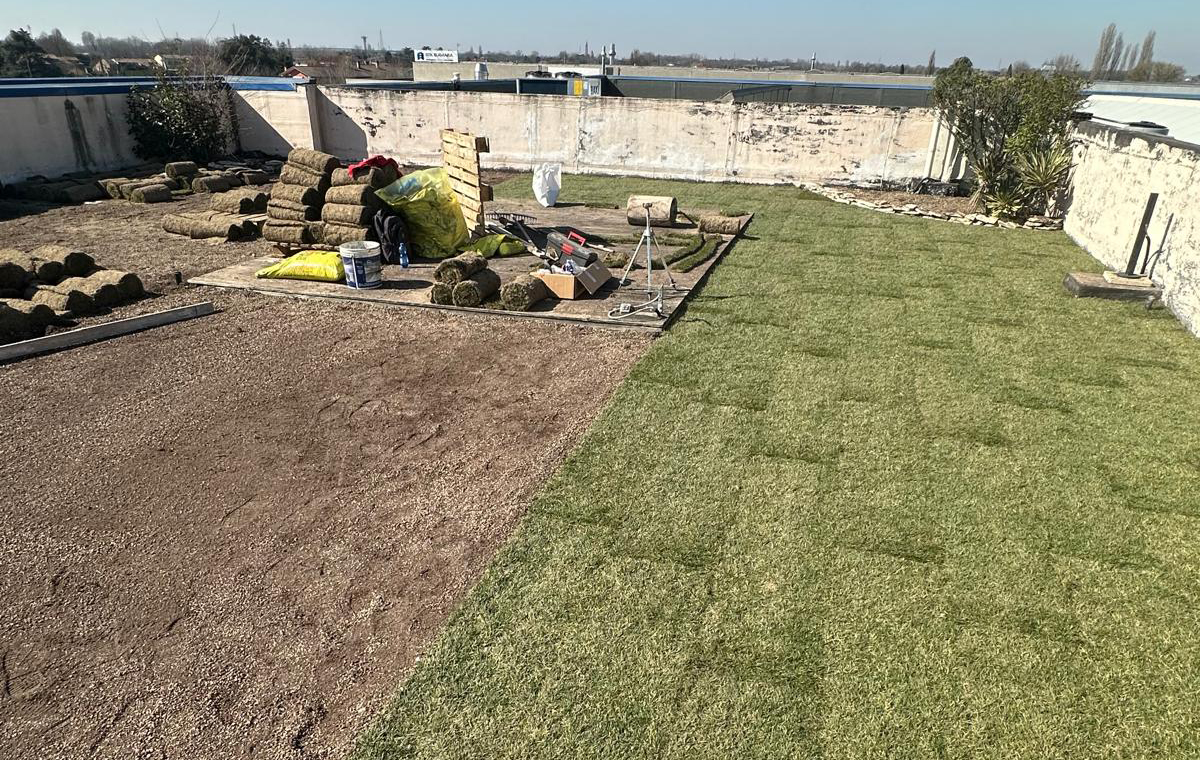
The green roof installed on Full Service’s industrial building demonstrates the practical benefits of this technology. It has helped the company reduce energy consumption, improve indoor comfort and contribute to environmental sustainability.
This experience shows that green roofs can be successfully installed on industrial and commercial buildings, as well as residential properties.
Choosing a green roof is a responsible decision for the environment and for the well-being of building occupants. Its main sustainability benefits include:
- A lower environmental impact through reduced CO₂ emissions.
- Improved water management and reduced pressure on urban drainage systems.
- Greater well-being for people living and working in buildings, thanks to a healthier, more natural environment.
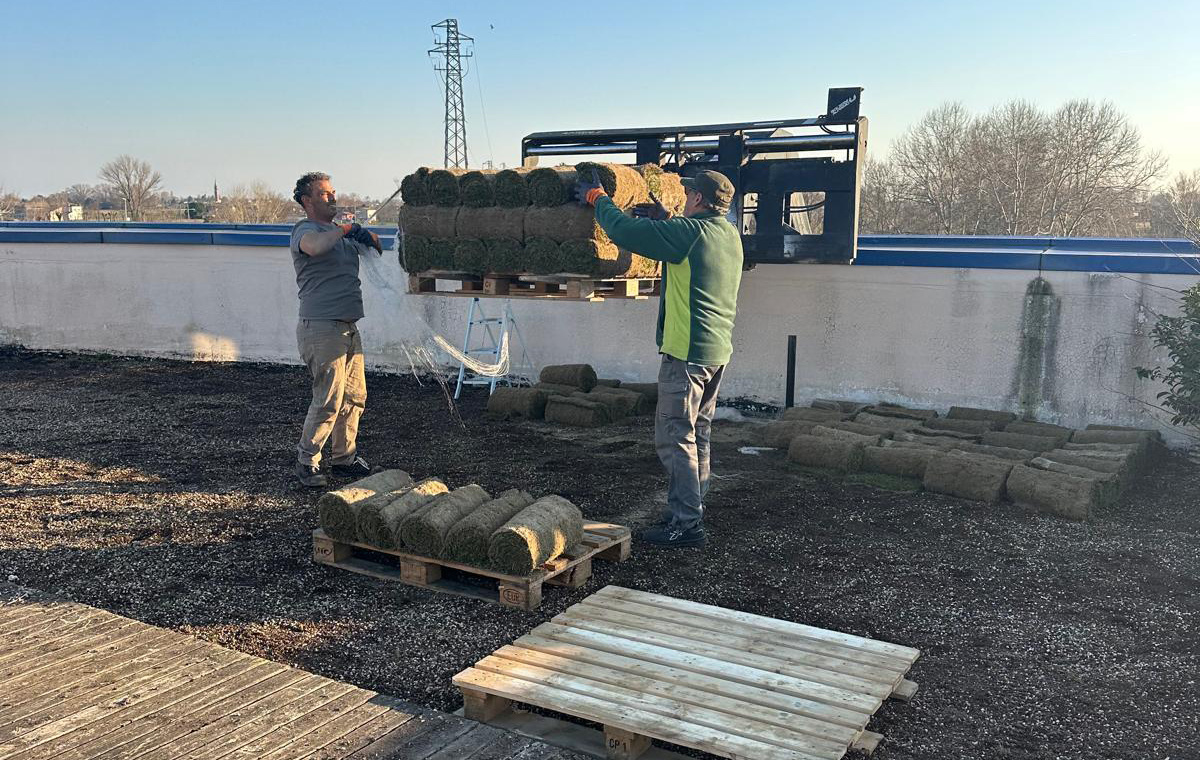
Green roofs offer an innovative way to improve building energy efficiency, protect the environment and enhance property value. Full Service’s experience demonstrates that adopting this technology can be a beneficial, sustainable investment for the future.
To find out more about installing a green roof on your business premises or home, contact Full Service Green Solutions for advice.